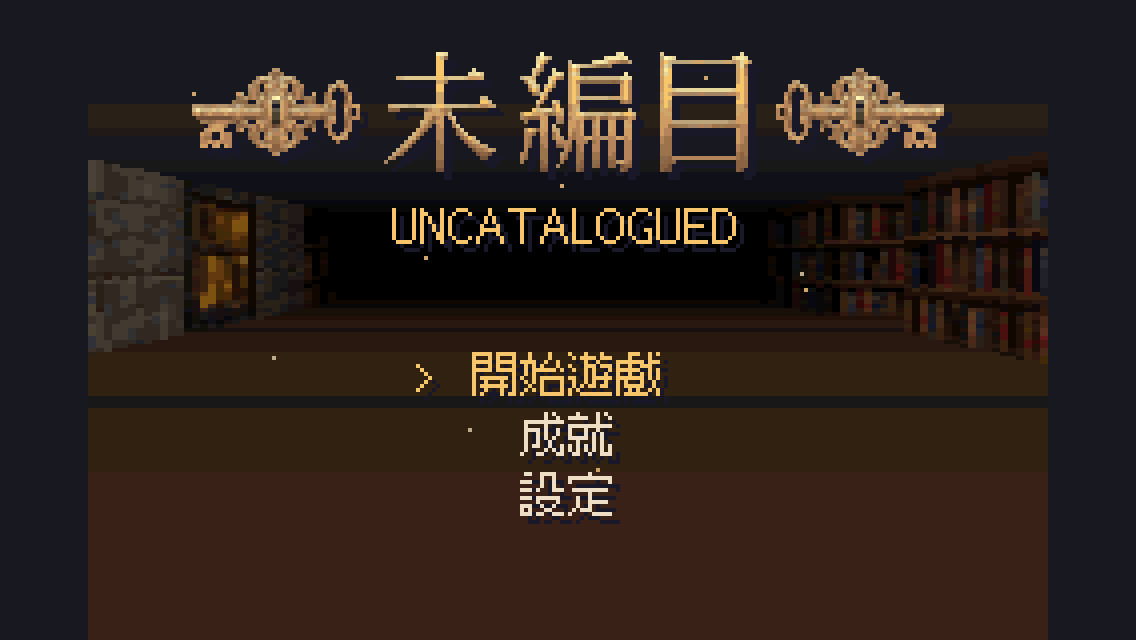
Hello, players and friends!
Today we’d like to introduce the new game SimplexCode is working on: Uncatalogued.
First, let’s get the obvious question out of the way, since it’s the first thing everyone asks when they see the screenshots:
The graphics look rough on purpose — because the game runs on the Game Boy Advance (GBA).
The low resolution, the limited colours, the chunky pixels you can see as soon as you lean in… none of that is unfinished art. They’re trade-offs we made so the game runs smoothly on real GBA hardware. This post gives you a look at the game itself first, and at the end we’ll talk about why we chose to make it this way.
About Uncatalogued
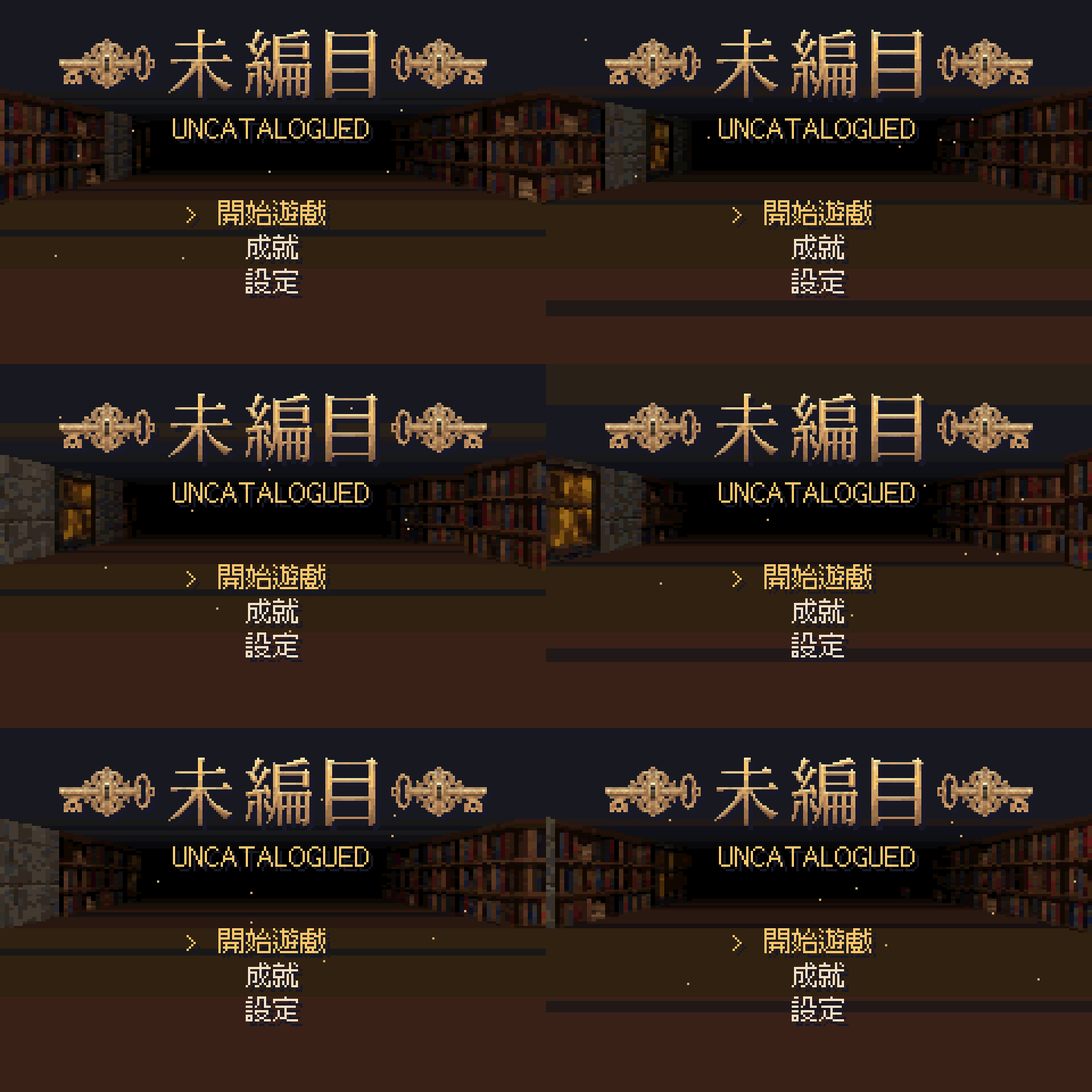
The title screen: the stacks slowly turning in the background.
Carry a lamp with limited oil down into an underground library that keeps rearranging itself.
You are the new night-shift librarian. Each night you collect an oil lamp at the circulation desk on the ground floor and head down into the stacks alone — B1, B2… all the way down to the deepest floor, the one nobody has ever catalogued.
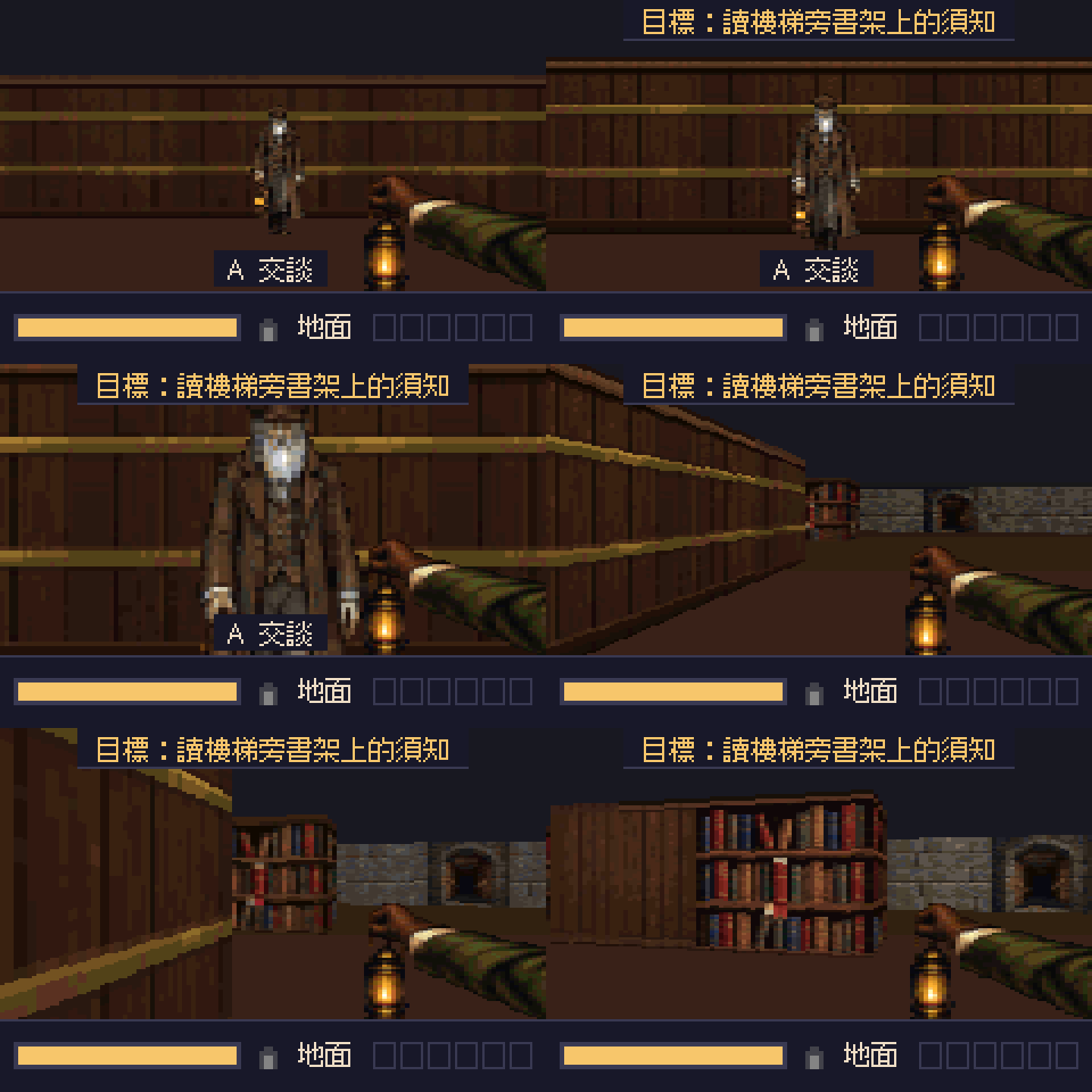
The circulation desk on the ground floor. Every night starts here, with the Lampkeeper behind the counter handing you your lamp.
Core gameplay: knowledge is progress
The single most important design rule in Uncatalogued is: there is no permanent stat growth.
No extra health, no extra oil, no running faster. Everything you bring down — items, keys, pages you’ve picked up, oil you didn’t use — is reclaimed by the library when the night ends.
The only thing that stays is the knowledge you’ve catalogued: books you’ve read, codes you’ve noted down, patterns and shortcuts you’ve discovered. Each becomes a catalogue card in your notebook, kept forever. The only way to get stronger is to understand the library better.
Lamp oil: time, light and ammunition
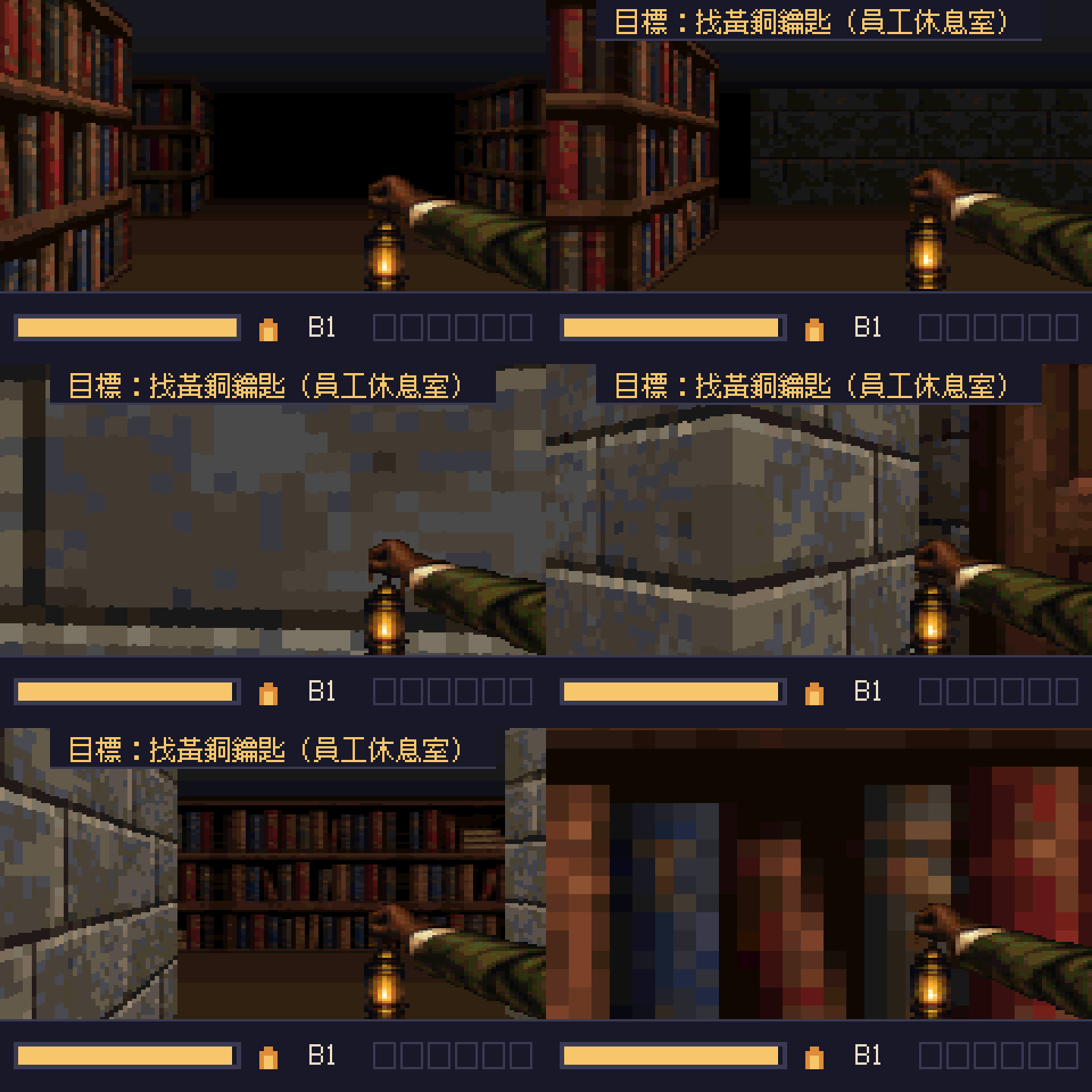
The B1 Reading Hall. The lamp only lights a small circle around you; a little further out, it’s pitch black.
Your lamp oil is the only time resource in a run. It’s always running down, and lasts about 10 minutes. Once it burns out, all you have left is a faint glimmer and the sounds around you to get through the last few seconds — and when time’s up, the night is over.
Reading and catalogue cards
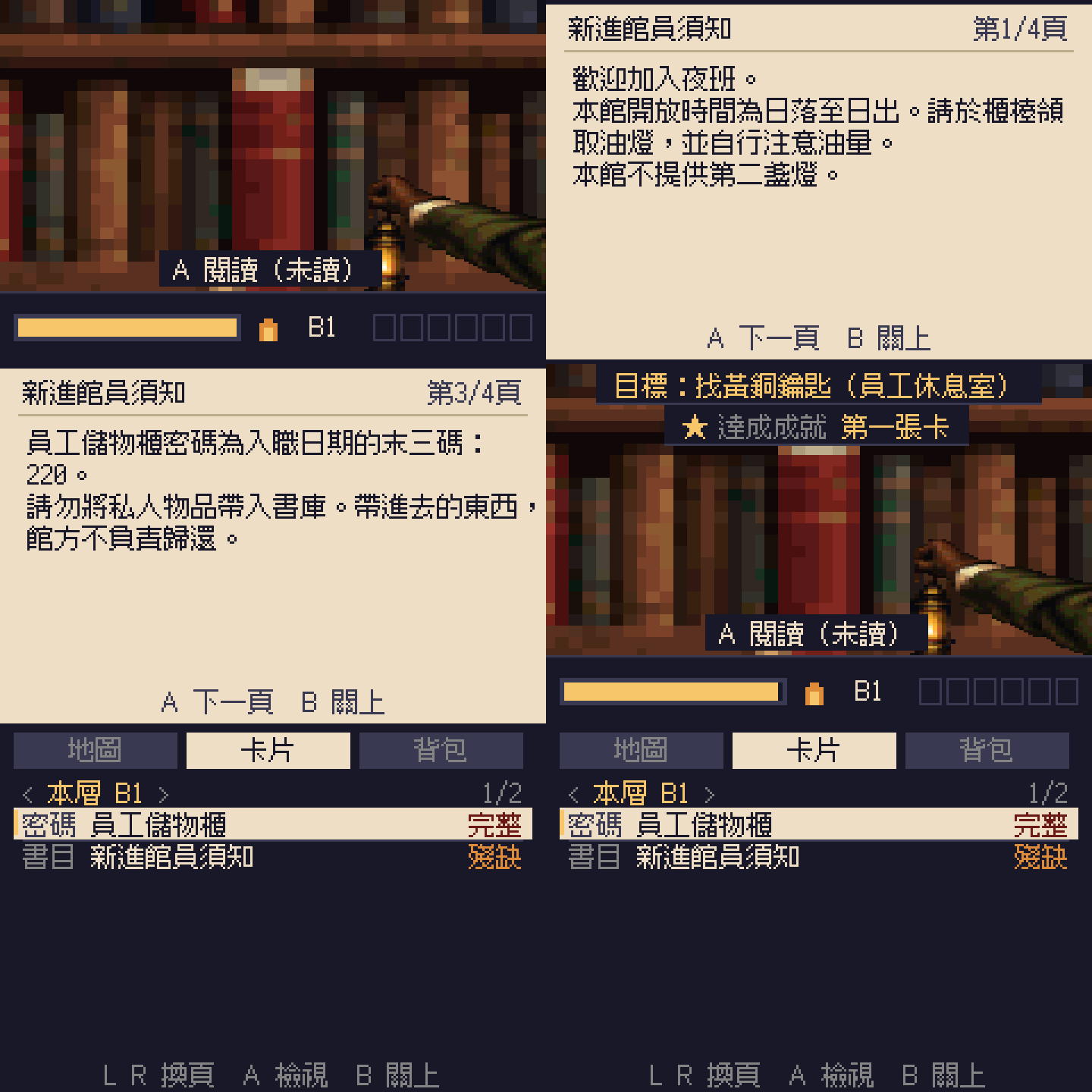
Reading “Notes for New Librarians” at a bookshelf. Any code you read is written onto a catalogue card in your notebook automatically.
The books hide codes, maps and the habits of the Keepers — some writing can only be seen by striking a match. The next night, you can carry that knowledge straight down to deeper floors.
The Keepers, and throwing oil
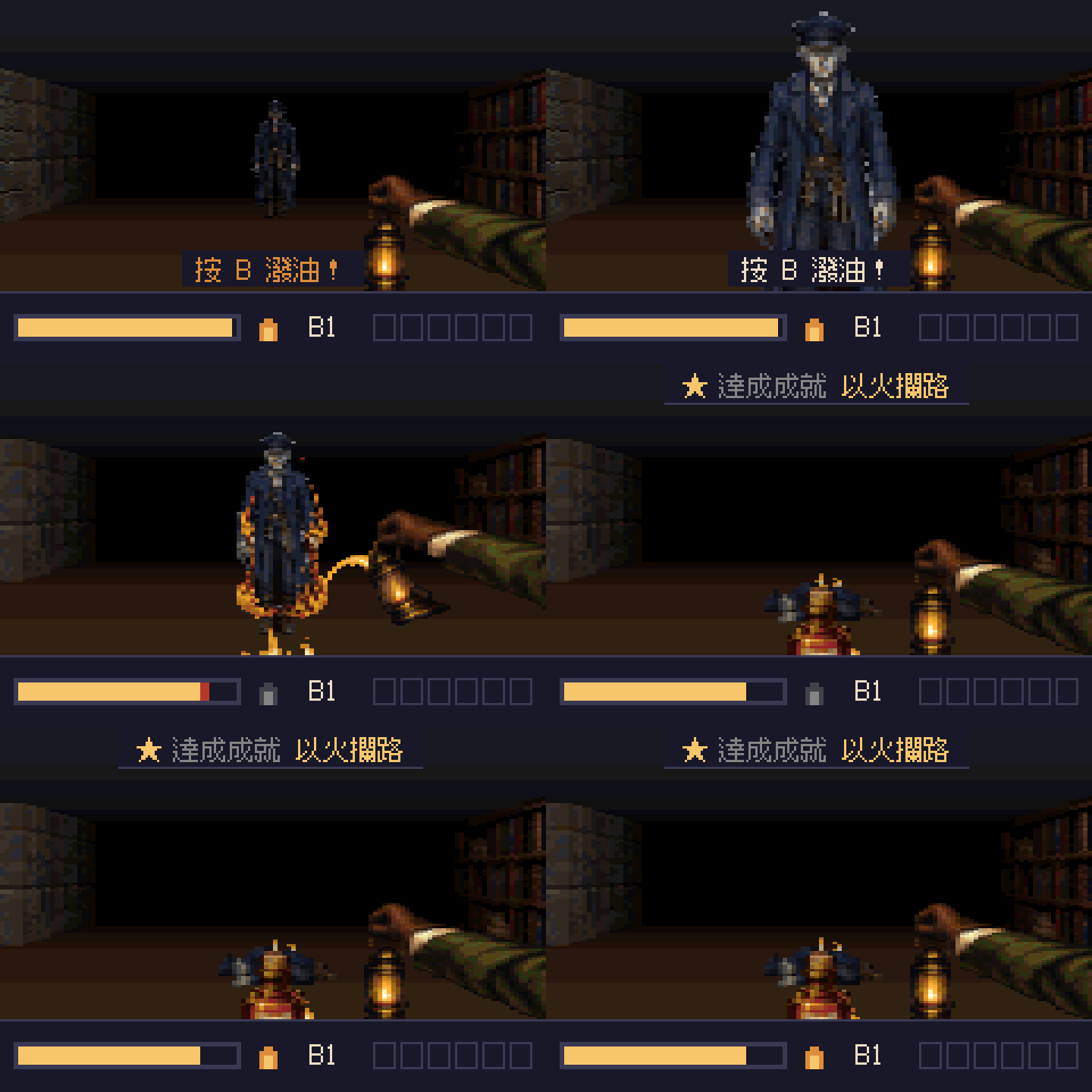
A Shelf-Walker emerges from the dark. Getting touched spills your oil; throw oil in front of you and light it, and you can knock it down for a while.
The stacks are home to “Keepers” that move in the dark: Shelf-Walkers that patrol along the shelves, Hushers that come closer whenever they hear a sound, Scribes that retrace the path you walked three seconds ago…
Your only weapon is the lamp in your hand — throw some oil and light it, and you can hold them off or knock them down for a while. But oil is time: the more you throw, the shorter the night. Fire can’t destroy a Keeper; the real way through is still dodging, hiding, and using the rules you already know.
Floors that rearrange themselves
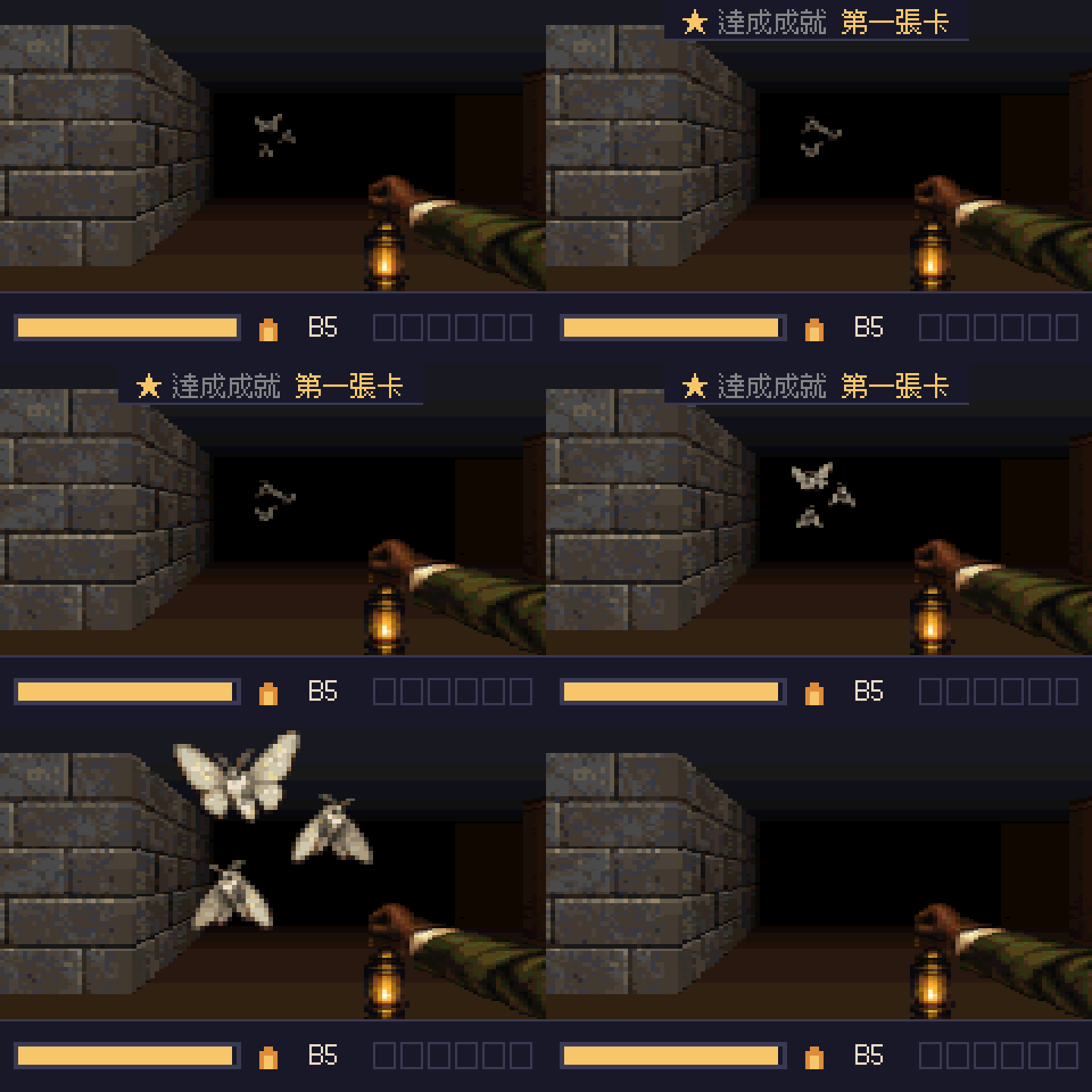
The B5 Restoration Room: lamp moths are drawn to your lamp.
Floors B2 to B6 are rearranged every night, but every “pattern” always holds — for example, there’s always a hidden compartment under a desk lamp of a certain colour. The map changes; the patterns don’t. Only those who remember the patterns will find the way down.
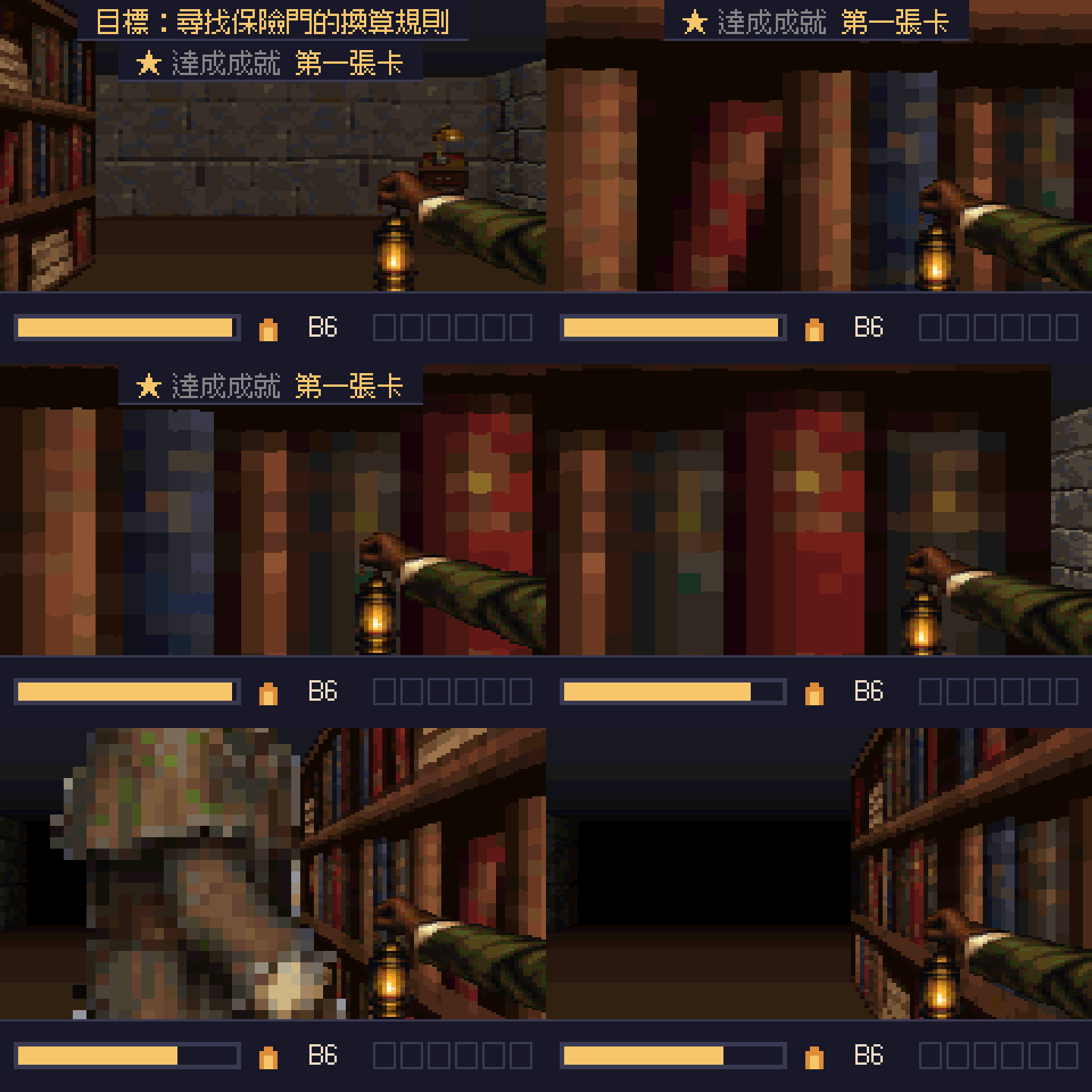
The B6 Deep Archive: the Scribe follows along the exact path you took.
Why do the graphics look so “rough”?
Uncatalogued has followed one rule from day one: “GBA first.” Every feature has to answer three questions first: Can the GBA run it? Can you do it with the GBA’s buttons? Will it fit?
The GBA is a handheld released in 2001, with a small screen, limited performance and not many colours to work with. What we want to make is a game that genuinely fits on a GBA cartridge, so the resolution, the colours and the texture sizes all stay within what the GBA can handle.
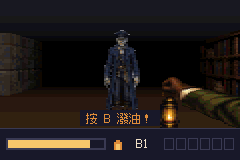
The image above is the game screen at its original size — the size of the entire GBA screen.
The other screenshots in this post have all been scaled up, which is why they look so “chunky”; on the GBA’s tiny screen, it actually looks quite detailed.
The PC version looks exactly the same. We didn’t make a separate, prettier version for PC, because we want both to be the same game. And over time these constraints have shaped what this game is: the narrow circle of light, the heavy darkness and the controls that rely on just a handful of buttons all make the tension of “walking into the stacks alone with a lamp” even sharper.
As for how we got all of this running on the GBA, we’ll save that for the next devlog.
Development progress
The game can already be played from start to finish, from the ground floor all the way down to the deepest level, and all three endings are done. The game supports Traditional Chinese, English and Japanese, and we’re planning to release it on both PC and GBA.
Next, we’ll be focusing on external playtesting, balancing, and more puzzles that span multiple floors.
If you also once stayed up late under the covers playing your GBA, we hope Uncatalogued brings that feeling back.
Let’s finish cataloguing this library before the lamp goes out.
The SimplexCode team